
i can barely speak in my mother tongues stutter
my accent is bad
i hate jalebi
but i like aloo samosa
i'm a bad brown
girl i didn't join the
SAA or the ISA
i just didn't know
whether i was desi or irani
i said turmeric
before i said haldi
i go to white-people karaoke bars
i sang Nickelback with a tattooed man
i'm a bad brown girl
my family is from nowhere
and everywhere i'm not sure
i understand the meaning of the word
diaspora
but everyone keeps saying it
i'm a bad brown
girl i love my
culture
i hate my culture
i think my children one day
could be half white i worry
they'll never understand mama's life i worry
they'll understand completely
i'm a bad brown girl
i stopped attending Eid functions
i hear the community talk
do they like me?
do i like them?
i'm a bad brown girl
i rewatch Devdas with subtitles
i listen to qawwali but i haven't read
namaz in ages
goddammit i love everything
with pumpkin in it
i'm a bad brown girl
i worry i don't make enough
"brown girl art,"
but i'm a brown girl making art
isn't that enough?
i'm a bad brown
girl i could not be
your faux nostalgia of
the lost sounds of churiya
the winds whistling through the badghir i am
not sorry to be as i am
what the days made me
how the earth shaped me
neither a perfect sculpture
of the Orient nor the
postcard
on the success of assimilation
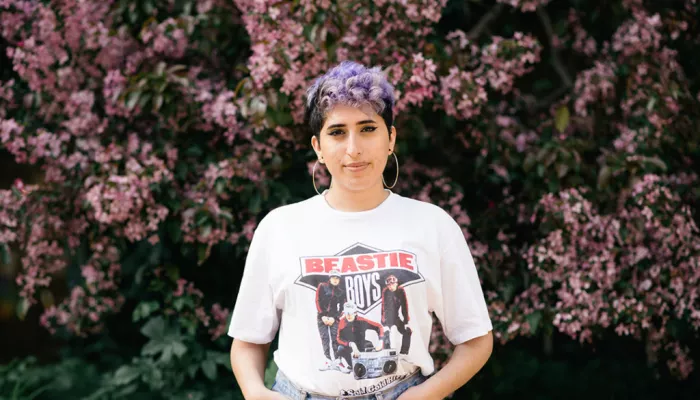
The poem tells the story of a young Arab woman caught between her culture and her North American upbringing.
- Read the poem out loud. Notice how many times the line “bad brown girl” is repeated Try to read this line with different intentions each time. Try to emphasize “bad” or “brown.” Try to invoke sadness, sarcasm, refusal, or other sentiments.
- The poem is centred in the dilemma of being disconnected from one’s own culture. The poet speaks of growing up in a Western world and struggling to maintain connection with where her family is from. We all exist in multiple identities that may be in conflict. What different worlds do you live in and how are they at odds with one another?
- The poem is full of contrast, such as feeling a part of one’s community—“I like aloo samosa”—and then feeling apart from it—“my accent is bad.” The poet mentions things that she identifies with from her culture and ways she feels distant. In what areas of your life do you feel simultaneously close and distant at the same time? How do you resolve this kind of tension?
- What does the final stanza show about the poet’s journey with assimilation? Do you think she arrives at a form of acceptance?
- Why is “brown girl art” important? Why is it significant to represent one’s culture and origins through art? What kind of impact might this poem have on others who relate to the poem and the poet?
- In the poem, Shafi writes:
i think my children one day
could be half white i worry
they'll never understand mama's life i worry
they'll understand completely
What do you think the poet is concerned about for her future children? What effect does it have to invoke future generations?
Writing activity: Write a poem about being caught between two worlds, at school, at home, or in your private life.
Hana Shafi, "Bad Brown Girl," from It Begins With the Body. Copyright © 2018 by Hana Shafi. Reprinted by permission of Book*hug.
Source: It Begins With the Body (Book*hug, 2018)